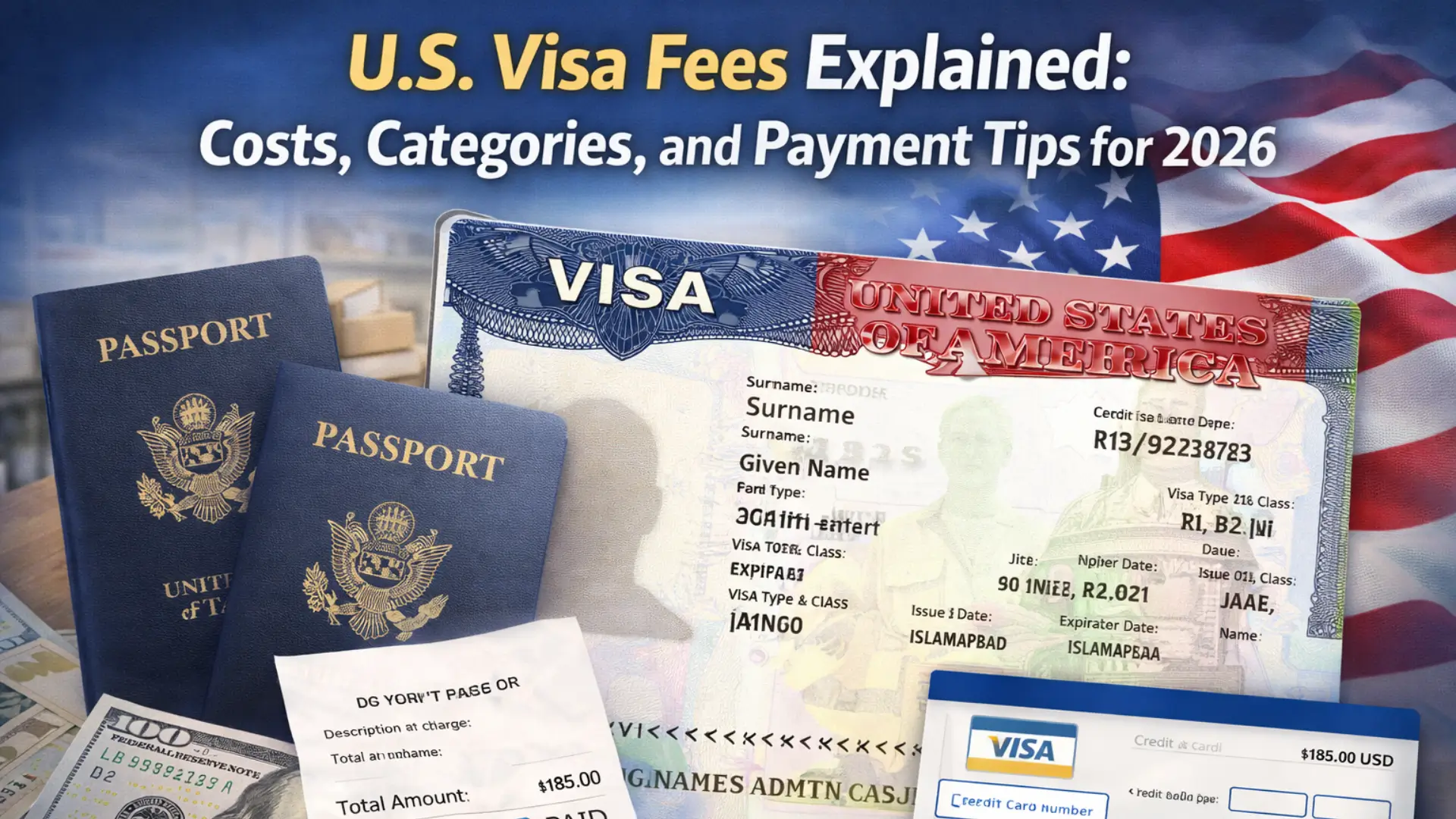
U.S. Visa Fees Explained. Applying for a U.S. visa involves more than filling out forms—it includes navigating a variety of fees that are essential to the application process. From short-term tourist trips to permanent residency, understanding visa costs is crucial for applicants to budget effectively and avoid surprises. Fees are set by the U.S. Department of State for nonimmigrant visas and by USCIS for related petitions. Most are non-refundable, making it essential to know what you are paying for.
Nonimmigrant Visa Fees Breakdown
Nonimmigrant visas allow temporary stays in the U.S. for purposes like tourism, business, study, or work. Applicants must pay Machine Readable Visa (MRV) fees upfront to schedule interviews. As of early 2026, the standard MRV fee is $185 for most categories:
- B-1/B-2 visitor visas
- F-1/M-1 student visas
- J-1 exchange visitor visas
Petition-based work visas like H-1B (specialty occupations), H-2A/H-2B (seasonal or agricultural workers), L-1 (intracompany transferees), O-1 (extraordinary ability), and R-1 (religious workers) also carry the $185 base MRV fee once USCIS approval is granted.
Visa Integrity Fee
A recent addition is the $250 Visa Integrity Fee, applied at the time of visa issuance for nearly all nonimmigrant categories (excluding diplomatic visas A and G, and a few others like C-2 for UN transit). Introduced under new immigration budget laws and adjusted for FY2026 inflation, this fee supports anti-fraud efforts and program security amid growing global demand.

For example, a B-2 tourist visa now costs $435 ($185 MRV + $250 Integrity Fee). Similarly, the K-1 fiancé(e) visa has a $265 MRV plus the Integrity Fee, bringing the total to $515. Fees for E visas (treaty traders/investors) are $205, while ESTA (visa waiver authorization) jumped to $13 and land border I-94 admissions rose to $24.
Reciprocity Fees
The U.S. applies reciprocity fees when an applicant’s home country charges U.S. citizens extra for similar visas. For instance:
- B-1/B-2 visas for Filipinos from Quezon City: $0 reciprocity
- H-1B work visas may exceed $500 depending on country-specific rules
It’s important to verify the reciprocity table on the U.S. State Department website for accurate, up-to-date information.

Nonimmigrant Visa Fees Table
| Visa Type | MRV Fee | Integrity Fee | Reciprocity | Total Example (No Reciprocity) |
|---|---|---|---|---|
| B-1/B-2 Visitor | $185 | $250 | Varies | $435 |
| F-1/M-1 Student | $185 | $250 | Often $0 | $435 |
| H-1B/L-1 Worker | $185 | $250 | Up to $5,000+ | $435+ USCIS fees |
| K-1 Fiancé(e) | $265 | $250 | Varies | $515 |
| ESTA (Visa Waiver) | N/A | N/A | N/A | $13 |
Immigrant Visa Costs
Immigrant visas lead to green cards and involve two main stages:
- USCIS petition approval (e.g., family-based I-130 at $675 or employment-based I-140 at $715 after FY2026 updates)
- National Visa Center (NVC) and consular processing
State Department application fees for immigrant visas:
- Immediate relatives or family preference categories: $325 post-I-130 approval
- Employment-based visas: $345 post-I-140 approval
- Diversity Visa (DV) lottery, self-petitions, or returning residents: $205
Additional costs include:

- Affidavit of Support (I-864) review: $120
- Medical exams: $200–$600 via embassy-approved panels
- Minor consular surcharges during interviews
Special immigrant visas (e.g., Iraqi/Afghan allies) are often fee-exempt.
Immigrant Visa Fee Table
| Category | USCIS Petition Fee | State Processing Fee | Additional Costs |
|---|---|---|---|
| Immediate Family (Spouse/Children) | I-130: $675 | $325 | I-864: $120, Medical Exams |
| Family Preference | I-130: $675 | $325 | USCIS renewals, wait times |
| Employment-Based | I-140: $715 | $345 | Premium processing: $2,805 |
| Diversity Visa | None (lottery entry free) | $330 post-selection | Document shipping |
USCIS fees fund 96% of operations, including technology upgrades, backlogs, and fraud detection, without taxpayer dollars. FY2026 adjustments include:
- I-485: $1,440 → $1,500
- EAD (I-765): $550 → $560
Additional and Optional Fees
Beyond core fees, applicants may encounter:

- Premium processing: $2,805 guarantees 15-day USCIS decision
- Biometrics: $85 (often bundled)
- Medical exams: $200–$600
- Translations and notarizations
- Courier delivery of passports: $20–$50
Certain dependents (H-4 or L-2 spouses) pay no separate MRV, but USCIS petition fees apply (~$460–$780).
Why Visa Fees Matter
Visa fees support a self-funded system:
- State Department MRV collections finance consular staffing, secure facilities, and visa processing
- USCIS relies on fees for backlog management, technology, and fraud prevention
Inflation adjustments and the Integrity Fee also help prevent overstays and ensure fairness. Reciprocity ensures equity, mirroring fees U.S. citizens pay abroad.
Payment Process and Tips
- Nonimmigrant MRV fees: Pay online or at designated banks, receipt needed for scheduling appointments via usvisas.state.gov
- USCIS fees: Pay by check, credit card, or e-filing
- Refunds: Rare; only via DS-164 in extreme cases
- Updates: Fees can change annually due to inflation or reciprocity
Being aware of all potential costs helps avoid delays, surprises, or rejections.
Conclusion
U.S. visa fees is essential for planning any trip or immigration process. From MRV and Integrity Fees for temporary visits to USCIS petition and consular processing costs for permanent residency, these charges fund a secure, self-sustaining system. Being informed ensures applicants can budget, meet requirements, and reduce stress while navigating the complex U.S. visa landscape in 2026.