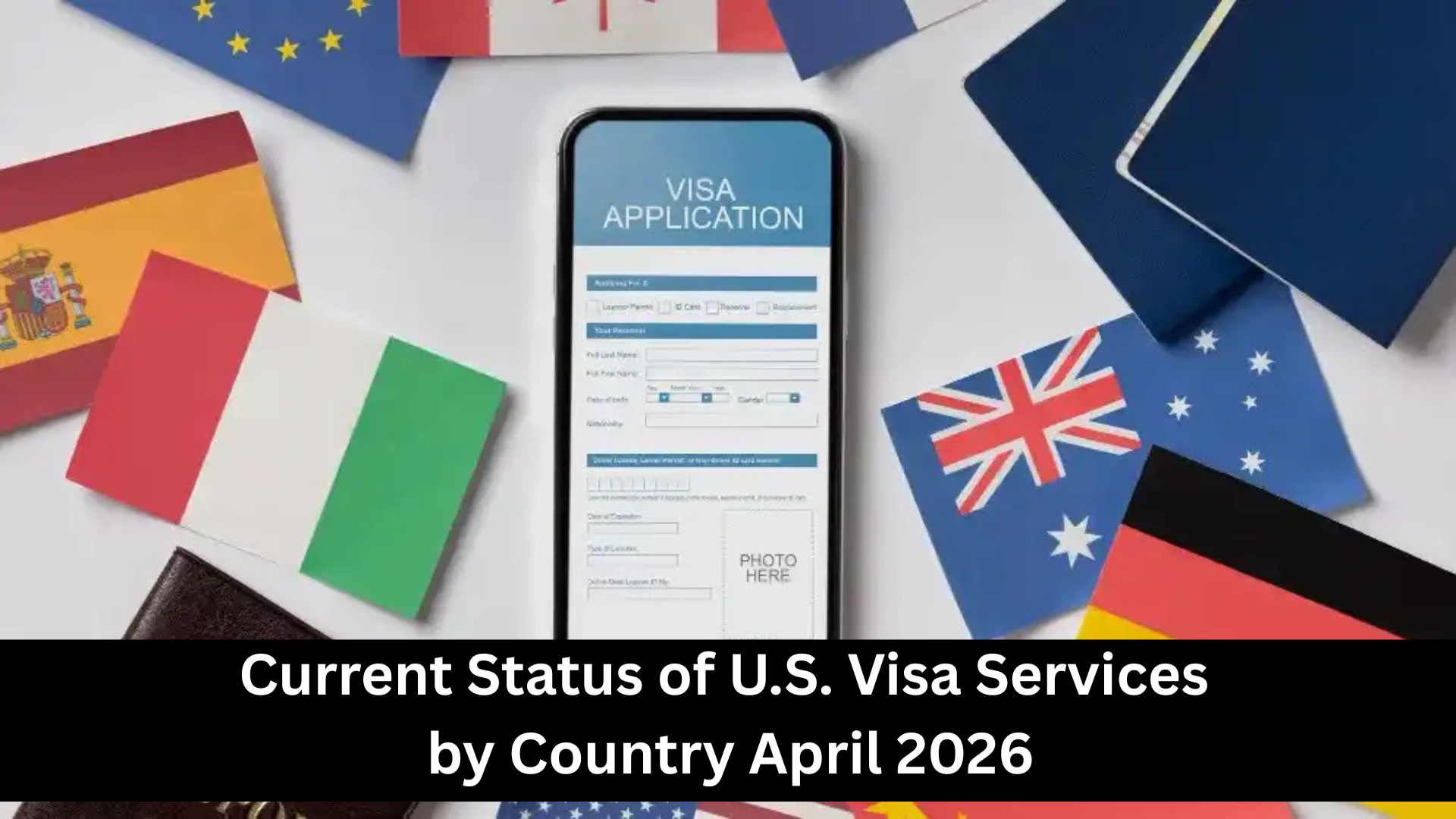
Current Status of U.S. Visa. U.S. visa services worldwide remain operational, but availability, processing speed, and eligibility vary significantly depending on the applicant’s nationality and visa category. In many regions, embassies continue routine processing; however, recent policy changes introduced in 2026 have created major restrictions for certain countries.
Global U.S. Visa Services
The U.S. Department of State oversees visa issuance through embassies and consulates around the world. As of April 2026, most locations are still conducting interviews and processing applications for non-immigrant visas such as tourist, student, and work visas.
However, appointment wait times differ widely by country due to demand, staffing, and security-related policies. Some applicants face quick scheduling, while others experience long delays or limited appointment slots.
Major Policy Change Effective 2026
A significant shift occurred on January 1, 2026, under a new presidential proclamation that introduced broad visa restrictions for certain nationalities. According to official guidance, some countries are now subject to full or partial suspension of visa issuance.

Countries Facing Full Visa Suspension
Applicants from the following countries face full suspension of both immigrant and non-immigrant visas (with limited exceptions):
Afghanistan
Eritrea
Haiti
Iran
Libya
Niger
Somalia
South Sudan
Sudan
Syria
Yemen
For nationals of these countries, new visa issuance is largely suspended unless they qualify under rare exemptions such as diplomatic travel or national-interest waivers.

Countries Facing Partial Visa Suspension
Some countries are subject to partial restrictions, where only specific visa categories are affected (such as tourist, student, or immigrant visas):
Cuba
Nigeria
Venezuela
Zimbabwe
Applicants from these countries may still be eligible for certain visa types, but processing is more limited and heavily scrutinized.

Impact on Visa Appointment Availability
Even in countries not affected by suspensions, appointment availability varies due to:
- High global demand for U.S. visas
- Staffing and operational limits at embassies
- Security screening requirements
- Backlogs from previous years
Some embassies continue to offer regular tourist and student visa interviews, while others have extended waiting periods of several months.
What Remains Unchanged
Despite the new restrictions:
- Existing valid visas are not revoked
- Applicants can still submit forms and attend interviews in many categories
- Work, study, and travel visas remain available in most non-restricted countries
Additional Policy Developments
Recent updates in 2026 also indicate broader immigration tightening measures, including expanded visa screening and increased refusal rates in certain regions. These policies are part of a wider effort to enhance security vetting and regulate migration flows.
Global Impact on Applicants
The changes have created mixed conditions worldwide:
- Some applicants benefit from stable processing in unaffected countries
- Others face delays, stricter eligibility rules, or full suspension
- Immigration pathways such as family-based green cards are more limited for affected nationalities
Conclusion
The current status of U.S. visa services in April 2026 reflects a complex global system shaped by security policies and administrative changes. While many embassies continue normal operations, new restrictions on specific countries have significantly impacted visa issuance and processing worldwide.

Applicants are strongly advised to check their nearest embassy or official U.S. Department of State updates for the most accurate and country-specific information before applying.