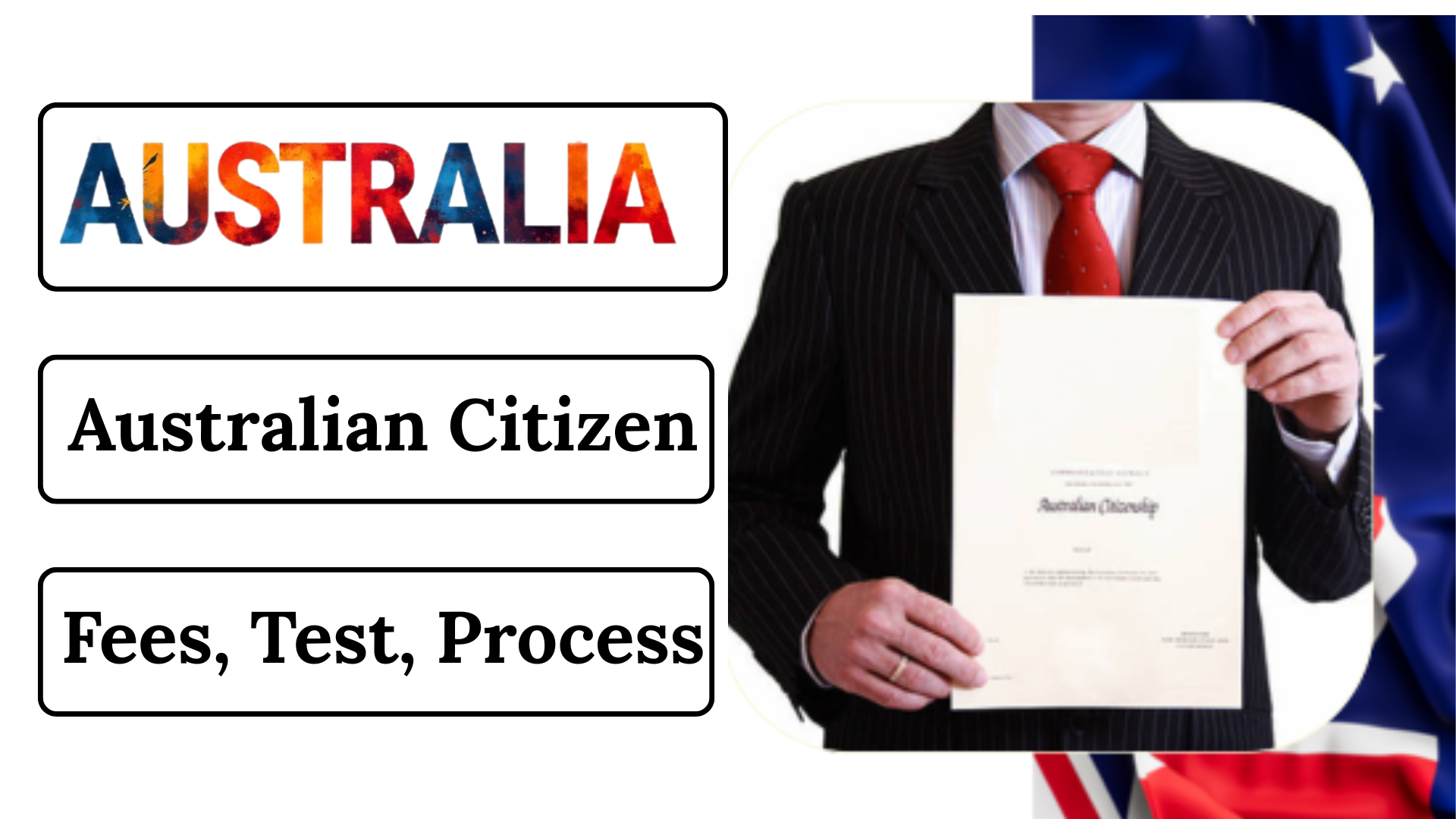
How to Become an Australian Citizen in 2026. Becoming an Australian citizen is a big milestone. It gives you full rights, security, and a permanent place in Australian society. The process looks complex, but if you understand the requirements, documents, fees, test, and ceremony, it becomes much easier to manage.
This guide explains step-by-step how to become an Australian citizen in 2025, especially for permanent residents (including Indians living in Australia).
Main Pathways to Become an Australian Citizen
1. Citizenship by Conferral (Most Common Route)
For most adults, citizenship by conferral is the standard pathway.
You usually qualify if you:
- Are a permanent resident
- Have lived lawfully in Australia for 4 years
- Have been a permanent resident for at least 12 months
- Meet the residency, character, and English requirements
- Pass the Australian citizenship test
Around 90% of applicants use this route, including most skilled migrants, partner visa holders, and Indian PR holders.
2. Citizenship by Descent
This pathway is for people who:
- Were born outside Australia, and
- Have at least one Australian citizen parent at the time of birth
They can claim Australian citizenship based on their parent’s citizenship, not on residence in Australia.
3. Citizenship by Adoption
If a child has been legally adopted by Australian citizen parents (under eligible adoption laws), they may be able to apply for citizenship.
The adoption must:

- Be legally recognised
- Have proper documents proving the child’s identity and adoption
4. Stateless Persons
Some stateless people who do not hold any nationality may be able to apply for Australian citizenship under special provisions, if they meet humanitarian and residency criteria.
Who Is Eligible for Australian Citizenship by Conferral in 2025–26?
To apply for citizenship by conferral, you must generally:
- Be a permanent resident of Australia
- Have lived lawfully in Australia for 4 years before applying
- Have spent no more than 12 months outside Australia in those 4 years
- Have spent no more than 90 days outside Australia in the last 12 months
- Be of good character (for applicants aged 18 and over)
- Have basic English and understand the rights and responsibilities of citizenship
Residency Requirements for Australian Citizenship
At the time you apply, you must:
- Have spent 4 years in Australia on valid visas, including
- At least 12 months as a permanent resident
How Your Time in Australia Is Counted
- Time on temporary visas (student, work, partner, etc.) usually counts towards the 4-year lawful residence
- You must not have been outside Australia for:
- More than 12 months total in the last 4 years, and
- More than 90 days total in the last 12 months before you apply
Example:
- Temporary visa from 1 January 2020
- PR granted on 1 January 2024
- If you meet the absence limits, you can usually apply on 1 January 2025
You can use the official Residence Calculator on the Department of Home Affairs website to check if you meet the residency rule.
Character Requirement – What Does “Good Character” Mean?
Anyone 18 or older must meet the good character requirement.
This is assessed based on:
- Your criminal record
- Any visa cancellations or immigration issues
- Any debts to the Australian Government
- Whether you have followed Australian laws
You will usually need to provide:

- An Australian Federal Police (AFP) check
- International police certificates for any country where you lived for 12 months or more since age 18
- Form 1195, signed by an Australian citizen referee who:
- Has known you for at least 12 months, and
- Can confirm your identity and character
Minor traffic fines usually do not cause problems, but serious offences, non-disclosure, or immigration breaches can delay or lead to refusal of your application.
Do You Need English Language Skills?
Yes, you need basic English to:
- Understand the citizenship test
- Understand your rights and responsibilities as a citizen
Who Is Exempt?
You may be exempt from the test and English requirement if you are:
- Under 18 years
- Aged 60 or over
- Have a significant physical or mental disability
For applicants aged 18–59:
- English is checked mainly through the citizenship test and sometimes through an interview
- You generally do not need a separate English test, especially if you have studied or worked in English in Australia
Documents Needed for Australian Citizenship Application
Having the right documents is critical to avoid delays.
Identity & Status Documents
- Current passport
- Full birth certificate (with parents’ names)
- Proof of permanent residency
- Photo ID (driver’s licence, proof of age card, etc.)
- Residential address proof
Police & Character Documents
- AFP police clearance
- Overseas police certificates for each country where you lived for 12+ months since age 16/18 (whichever is required)
Other Supporting Documents
- Marriage certificate or name change documents (if applicable)
- Form 1195 with details of your Australian citizen referee
- Two passport-sized photos with your full name written on the back
Important tips:
- Start police checks early – they can take 4–8 weeks
- Police certificates usually need to be less than 12 months old at the time of decision
- Overseas documents must be translated into English by approved translators
How to Apply for Australian Citizenship
1. Check Your Eligibility
- Use the Residence Calculator to confirm your residency
- Check your visa status using VEVO
- Make sure you meet character, residency, and English requirements
2. Prepare Your Documents
- Gather identity, residency, and police documents
- Have them certified if required
- Organise translations for non-English documents
3. Create an ImmiAccount
- Go to the Department of Home Affairs website
- Create or log in to ImmiAccount
- Choose the relevant form (commonly Form 1300t for standard adults)
4. Complete the Online Application
In your online form, you will provide:
- Personal details
- Travel history
- Visa history
- Address and employment details
- Character declarations
Upload clear scanned copies of your documents in accepted formats (PDF, JPEG etc.). Save your application regularly to avoid losing progress if the session times out.

5. Pay the Citizenship Application Fee
As of July 2025, the main fees are:
- Standard adult fee: AUD 575
- Concession fee: AUD 80 (for eligible concession card holders)
- Children under 16 applying with a parent: usually no fee
You can pay via credit card, PayPal, or other methods through ImmiAccount.
If you are eligible for a concession (e.g. Health Care Card, Pensioner Concession Card, financial hardship), upload proof so you can pay the reduced fee.
6. Take the Citizenship Test and Interview (If Required)
Applicants aged 18–59 usually need to:
- Sit a 20-question computer-based test in English
- Score at least 75% (15 out of 20 correct)
- Correctly answer all questions on Australian values
Some applicants may also attend an interview to confirm identity and English language ability.
7. Wait for Processing
Most applications take about:
- 5–11 months from application to decision
- 4–7 months from approval to ceremony
So overall, expect around 12–15 months, though some complex cases may take longer (up to 24 months).
You can check your status anytime via ImmiAccount.
8. Attend the Citizenship Ceremony
Once approved, you will be invited to a citizenship ceremony organised by your local council.
At the ceremony, you will:
- Take the Pledge of Commitment
- Receive your citizenship certificate
- Officially become an Australian citizen
You usually become a citizen at the moment you say the pledge, not when your application was approved.
What Is in the Australian Citizenship Test?
The test covers four main areas:
- Australia and its people
- Government and the law in Australia
- Australia’s democratic beliefs, rights, and liberties
- Australian values (respect, equality, freedom, rule of law, etc.)
The official resource is the booklet:
“Australian Citizenship: Our Common Bond”
It is available in English and many other languages (including Indian languages like Hindi, Punjabi, Tamil) to help you understand the content.
How to Prepare for the Citizenship Test
- Study the “Our Common Bond” booklet carefully
- Use official practice tests and online quizzes
- Give yourself 2–4 weeks to prepare
- Focus strongly on Australian values, as those questions must all be correct
- Practise reading and answering questions in English, even if you study the content in another language
What Happens at the Citizenship Ceremony?
At the ceremony, you can expect:
- Welcome and short speeches
- Acknowledgement of First Nations peoples
- Group recitation of the Pledge of Commitment (with or without “under God” – your choice)
- Presentation of citizenship certificates
- Singing of the Australian national anthem
You should:

- Bring your invitation letter and photo ID
- Arrive early for registration
- Dress in smart casual or formal clothes
- You can usually bring 2–4 guests, including children, depending on council rules
Benefits of Australian Citizenship vs Permanent Residency
| Aspect | Permanent Residency (PR) | Australian Citizenship |
|---|---|---|
| Right to live in Australia | Indefinite, but you must maintain a valid Resident Return Visa (RRV) for travel | Unconditional right to live in Australia forever |
| Travel | Need valid RRV for re-entry; may lose PR if away too long | Can hold an Australian passport, travel freely, and always return |
| Voting | Cannot vote in federal or most state elections | Full voting rights in all elections and referenda |
| Jobs | Some government and defence roles closed | Eligible for all government and defence jobs requiring citizenship |
| Deportation risk | PR may be cancelled for serious offences | Very strong protection; citizenship rarely revoked |
| Family sponsorship | Limited options | Can sponsor more family members for PR and citizenship pathways |
| Education & benefits | Not always eligible for HECS-HELP and some supports | Eligible for HECS-HELP and more government benefits |
| Time away from Australia | Must watch residency rules and RRV expiry | Can live overseas for years and still return any time |
For many PR holders, especially skilled migrants and their families, citizenship provides long-term security and full rights.
Dual Citizenship: India and Australia
- Australia allows dual citizenship
- India does not recognise dual citizenship
If you are an Indian citizen and become an Australian citizen:
- You must renounce Indian citizenship under Indian law
- You can apply for OCI (Overseas Citizen of India) status
Benefits of OCI for Former Indian Citizens
- Lifetime visa-free, multiple-entry access to India
- Can live, work, study, and do business in India (with some restrictions)
- Can own property (with certain rules)
But OCI holders cannot:
- Vote in Indian elections
- Hold Indian passports
- Work in most Indian government jobs
Common Reasons for Citizenship Application Rejection
Applications are often refused due to:
- Incorrect residency calculations
- Spending too much time outside Australia
- Undisclosed criminal history or immigration issues
- Providing incorrect or false information
- Incomplete or uncertified documents
- Not being a permanent resident at the time of decision
- Repeated test failures without improvement
Always:
- Use the Residence Calculator
- Disclose everything honestly
- Keep clear travel records (entry and exit dates)
Total Cost of Becoming an Australian Citizen (Approximate)
| Cost Component | Estimated Cost (AUD) |
|---|---|
| Citizenship application fee | $575 standard / $80 concession |
| AFP police check | ~$42 |
| International police certificates | $50–$200 (per country) |
| Document certification | $20–$100 |
| Passport photos | $15–$25 |
| Optional migration agent | $500–$2,000 (if used) |
| Estimated Total (without agent) | $700–$800+ |
The citizenship ceremony itself is free.
You can save money by:
- Doing the process yourself (without an agent)
- Only using paid services where truly necessary
Tips for Indian Citizens Applying for Australian Citizenship
- Start preparing documents 3–4 months before you become eligible
- Apply early for Indian police certificates, which can take 6–8 weeks
- Translate Indian documents into English using NAATI-certified translators
- Keep detailed records of your trips to India and other countries
- Learn about OCI so you can apply for it soon after getting Australian citizenship.
Conclusion
Becoming an Australian citizen in 2025 is achievable with careful planning, accurate residency calculations, and complete documents. By preparing early, passing the citizenship test and attending your ceremony, you secure full rights, an Australian passport, stronger career opportunities and lifelong stability and security for yourself and your family in Australia.