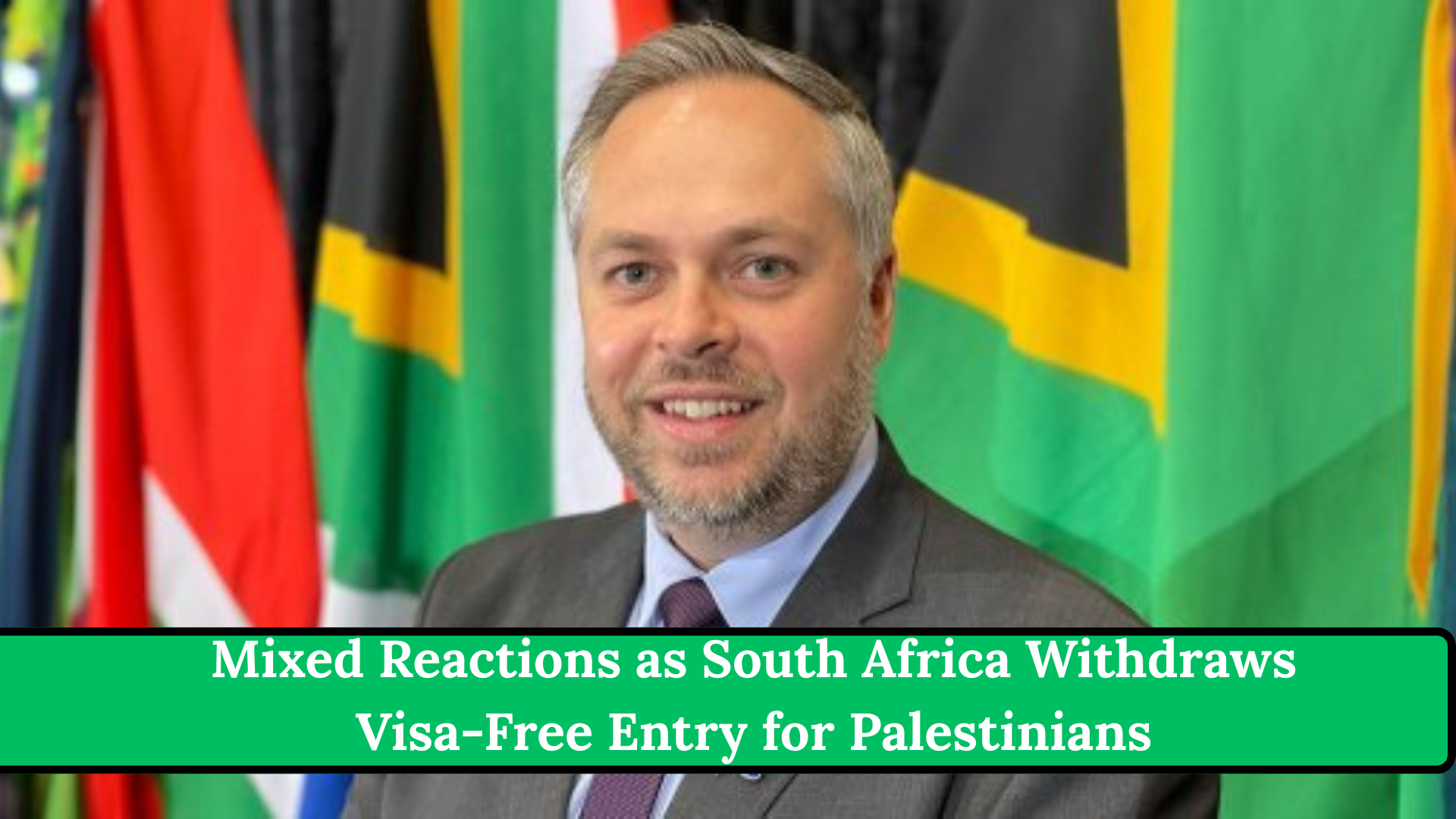
Mixed Reactions as South Africa Withdraws Visa-Free Entry for Palestinians. South Africa latest immigration decision has sparked nationwide debate after the Department of Home Affairs announced the withdrawal of the 90-day visa exemption for Palestinian passport holders. The move comes just weeks after two “mysterious” charter flights from Israel arrived carrying hundreds of Palestinians fleeing Gaza.
While the government says the exemption was being misused, civil society groups argue that the decision unfairly affects an already suffering population. The story has quickly grown into one of the most discussed issues in South Africa raising questions about security, humanitarian responsibilities, and the country’s historic stance on Palestine.
South Africa Ends Visa-Free Entry Over Abuse Claims
The Department of Home Affairs issued a detailed statement on Saturday confirming the termination of the 90-day exemption, stating that investigations uncovered deliberate and ongoing misuse of the system by Israeli-linked actors pushing “voluntary emigration” for Gazans.
Recent charter flights triggered alarm
Two major flights raised suspicions in recent weeks:

- 153 Palestinians arrived on a charter plane from Israel (via Kenya) in November.
- 176 Palestinians arrived in late October on another flight.
Authorities believe these events were not isolated, but rather part of an organized international relocation strategy.
Government stance: Protecting Palestinians, avoiding exploitation
According to the Home Affairs statement:
- The exemption was being used in ways “inconsistent with its humanitarian purpose.”
- South Africa refuses to be “complicit in any scheme to exploit or displace Palestinians from Gaza.”
- The withdrawal is described as the “most effective way” to stop questionable flights while still allowing genuine travelers to apply for visas.
The department also reassured that asylum claims from the charter flight arrivals would be processed fairly and legally.
Public Reaction: Sharp Divide Across South Africa
The decision has drawn strong reactions from activists, academics, and ordinary citizens.
Activists Call the Move ‘Collective Punishment’
Roshan Dadoo, coordinator of the South African BDS Coalition, expressed disappointment and frustration.
She said the exemption was a hard-fought victory for Palestinian solidarity movements in South Africa, and removing it now punishes all Palestinians — not just those involved in the flights.

Key concerns raised by Dadoo
- The decision is collective punishment for all Palestinians, including those traveling for conferences, studies, or family visits.
- Instead of targeting travelers, the government should act against the charter companies, such as:
- Blocking overflight permissions
- Denying landing rights
- People in Gaza cannot realistically apply for visas since South Africa’s representative office is located in Ramallah, far from conflict zones and often inaccessible.
Her emotional appeal reflects the wider concern that the visa reversal will isolate innocent Palestinians rather than stop misuse by third parties.
Academics Warn of Rising Xenophobic Narratives
Political science lecturer Dr. Ahmed Jhazbhay also criticized the decision, calling it “unfair, harmful, and based on unverified claims.”
Jhazbhay main arguments:
- The move penalizes a vulnerable community fleeing war and destruction.
- It could feed xenophobia and fear-based politics within South Africa.
- The country has a deep moral obligation, rooted in its anti-apartheid history, to stand with oppressed people like Palestinians.
- The visa withdrawal echoes restrictive policies from the past, which conflict with South Africa’s traditional humanitarian approach.
His comments highlight how deeply the issue touches South Africa’s political identity and international alliances.
Why the Government Says It Had No Choice
South Africa maintains that the step is not anti-Palestinian but rather a protective measure to prevent exploitation and unauthorized relocation schemes.
Government reasoning:
- Evidence suggests organized international attempts to move Palestinians through South Africa.
- The visa system must be safeguarded from abuse linked to Israel’s “voluntary emigration” initiatives.
- The exemption can be restored in a safer, more controlled manner once risks are addressed.
Officials insist that genuine Palestinian travelers remain welcome through the standard visa process.
Difficult Balance: Security vs. Solidarity
This issue places South Africa in a complex position:
| Key Concern | Government Position | Critics’ Concern |
|---|---|---|
| Security & system abuse | Exemption withdrawal is necessary to block unauthorized flights | Punishes innocent Palestinians |
| Humanitarian responsibility | Asylum claims will still be processed | Visa offices are inaccessible for Gazans |
| South Africa’s historic pro-Palestine stance | Policy aims to prevent exploitation of Palestinians | Decision contradicts solidarity principles |
The tension reflects the ongoing challenge: How does a country protect its borders without harming vulnerable refugees?
What Happens Next?
Possible future developments:
- A clearer visa application pathway for Palestinians may be introduced.
- Investigations into the alleged relocation schemes could lead to international diplomatic actions.
- Civil society pressure may push the government to reconsider or revise the policy.
- More Palestinians who arrived via charter flights may apply for asylum.
For now, the policy stands, and all Palestinian passport holders must obtain visas before traveling.
Conclusion
South Africa withdrawal of the 90-day visa exemption has reopened complex debates around security, solidarity, and refugee protection. While officials defend the move as necessary, critics warn it unfairly burdens Palestinians already facing extreme hardship. The issue remains deeply emotional and politically sensitive.