
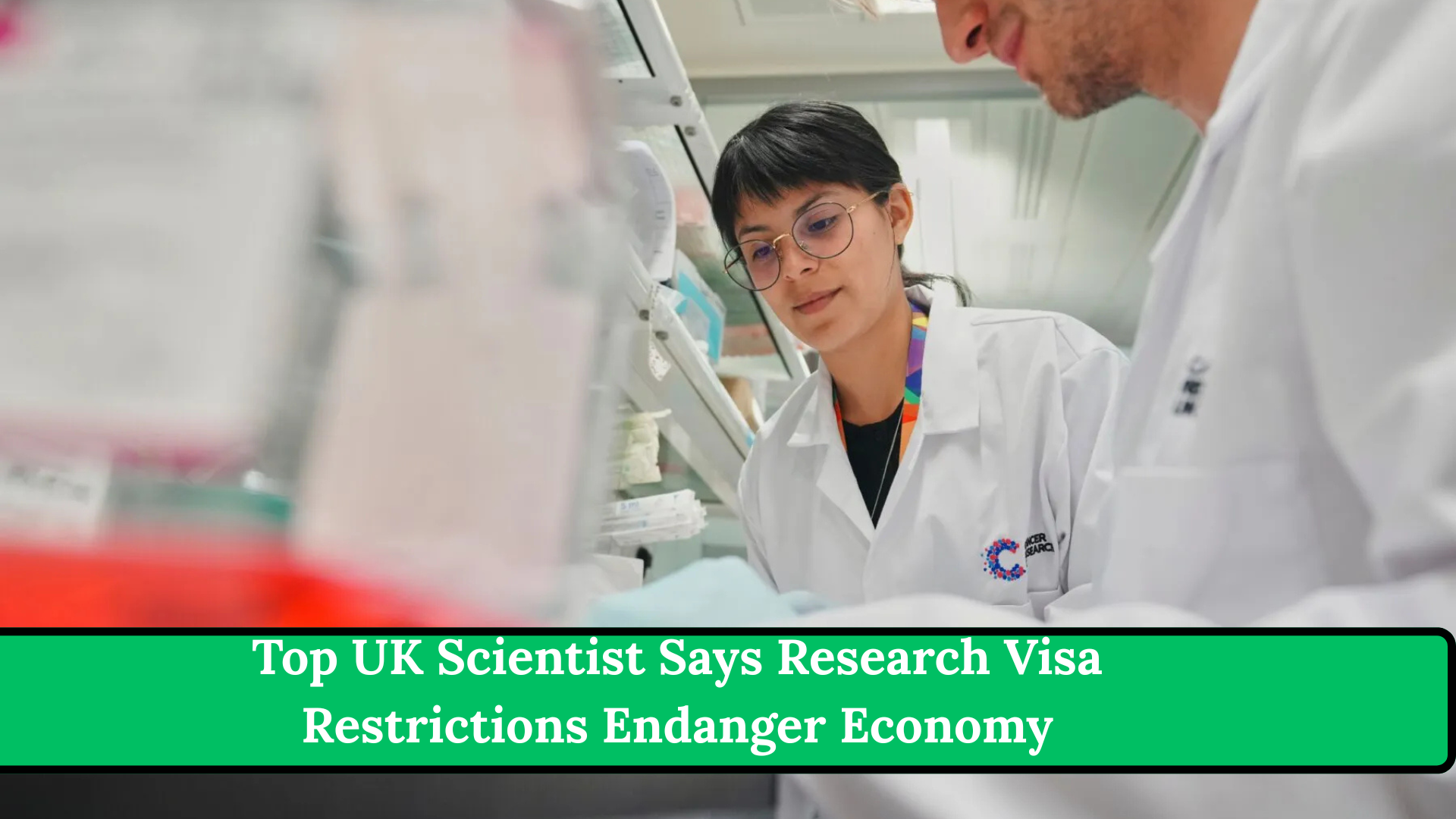
Top UK Scientist Says Research Visa Restrictions Endanger Economy. Britain’s scientific future is at a crossroads and one of the nation’s most respected scientists has sounded the alarm. Prof Sir Paul Nurse, Nobel Prize winner and President of the Royal Society, says the UK is “shooting itself in the foot” by imposing high visa fees and strict immigration rules on early-career researchers.
In a world where scientific innovation drives economic growth, Sir Paul believes the UK is making it harder not easier for global talent to contribute. His warning comes as countries like China and Singapore aggressively attract international researchers with smoother visa pathways, generous incentives, and world-class facilities.
Why the Warning Matters
Sir Paul Nurse isn’t just any scientist — he is one of the world’s most influential figures in biology and has advised several UK Prime Ministers. When someone of his stature speaks about the future of the British economy, policymakers listen.
But his message this time is blunt:
“Having expensive visa costs is shooting yourself in the foot. It absolutely doesn’t help in attracting these sorts of people.”
According to him, the UK’s research ecosystem is becoming fragile, and the visa system is one of the biggest barriers facing young scientists.
High Visa Fees Are Driving Talent Away
Early-career researchers often earn modest salaries and depend on scholarships or grants. Paying thousands of pounds in visa fees, NHS surcharges, and financial proof requirements becomes a heavy burden.

Key Barriers Researchers Face
- High visa application fees
- Annual NHS surcharge payments
- Proof of thousands of pounds in personal savings
- Long and complicated approval process
Many of these young scientists end up choosing countries that welcome them more openly.
And the competition is fierce.
China, Singapore & Others Are Gaining Ground
As global scientific competition increases, several countries are offering incentives to attract researchers:
Countries Actively Attracting Researchers
| Country | Attraction Strategy |
|---|---|
| China | Grants, labs, fast-track visas |
| Singapore | High salaries, strong research funding |
| Germany | Low visa fees, easy residency pathways |
| Canada | Friendly immigration rules, work permits for families |
Sir Paul warns that the UK risks falling behind if it doesn’t respond urgently.
Why Visa Restrictions Hurt the UK Economy
Scientific research isn’t just academic — it drives industries, innovation, and national growth. From pharmaceuticals to AI, space technology to healthcare, research talent is the backbone of job creation.
Sir Paul asks:

“Why do we put hurdles in the way of people who are going to drive our economy? It makes zero sense.”
According to him, failing to attract bright minds today means losing future discoveries, industries, and global competitiveness.
Government Justification: Funding the NHS & Controlling Migration
Supporters of the current visa system argue that:
- High visa fees help fund the NHS
- Strict requirements reflect public concerns about immigration
- Total migration numbers must stay within national limits
The Home Office says visa applicants must show adequate savings so they can “support themselves without public funds.”
However, critics argue that scientific researchers make up a tiny fraction of migrants.
How Many Researchers Come to the UK? Surprisingly Few.
According to recent Home Office data:

- Only 323 people received visas for jobs in natural and social sciences in the last quarter.
Migration experts say that even doubling this number would barely affect the UK’s overall migration statistics.
Yet the system remains strict.
Centre for Policy Studies: Mixed Views
The Centre for Policy Studies — a centre-right think tank — agrees that scientists should have easier visa pathways. But they also insist on maintaining overall migration control.
Karl Williams, a migration policy analyst, describes the recent population increase between 2021 and 2024 as:
“One of the most significant demographic events in modern British history.”
He believes the government must balance:

- Allowing more researchers
- While reducing numbers in other sectors
However, experts admit that there is no current system to manage these trade-offs effectively.
Bigger Problem: A Weak Signal to Researchers
Beyond costs and paperwork, Sir Paul Nurse says the current rules send the wrong message to international researchers.
They may feel:
- Unwanted
- Unwelcome
- Uncertain about their future in the UK
In a competitive world, negative signals matter.
Global researchers choose places where they feel supported and valued — and right now, the UK risks losing its edge.
What Scientists Want from the Government
Sir Paul urges the government to:

Reduce visa fees
- Remove or lower the NHS surcharge
- Simplify savings requirements
- Create a dedicated “research talent” visa route
- Send a positive message that international scientists are welcome
He believes these steps are essential to protect the UK’s global leadership in science.
Why This Debate Matters Now
With challenges like AI, climate change, global health, and technological disruption, scientific research is more important than ever. Nations that attract the best talent will lead the future.
The UK has world-class universities, innovative companies, and a strong scientific history. But without open doors for global researchers, even the strongest foundations can weaken.
Conclusion
The warning from Sir Paul Nurse highlights an urgent challenge. If the UK wants to stay a global science leader, it must make its visa system friendlier for researchers. High fees and complex rules risk pushing talent to competitor nations — and ultimately harming Britain’s economic future.