Australia Easiest Work Visa & PR Pathways for Skilled Workers. Australia is one of the best countries for skilled workers. Many people move there for better jobs, good pay, and a safe life. In 2026, Australia still needs skilled workers in many fields. These include healthcare, IT, engineering, construction trades, education, and hospitality.
The government has clear visa rules. If you follow them step by step, your chances improve. This guide explains the easiest work visas and PR pathways in simple English. You will learn requirements, documents, steps, processing time, common mistakes,
Why Australia Is Easy for Skilled Workers in 2026
Australia has skill shortages. Think of a house with many rooms. Some rooms are empty. Skilled migrants help fill those rooms. This helps the country grow.
Because of this need, Australia offers temporary work visas and permanent residence (PR) options. Some visas let you work first. Later, you can move to PR. If you choose the right pathway, the process becomes much easier.
Australia Easiest Work Visa Options
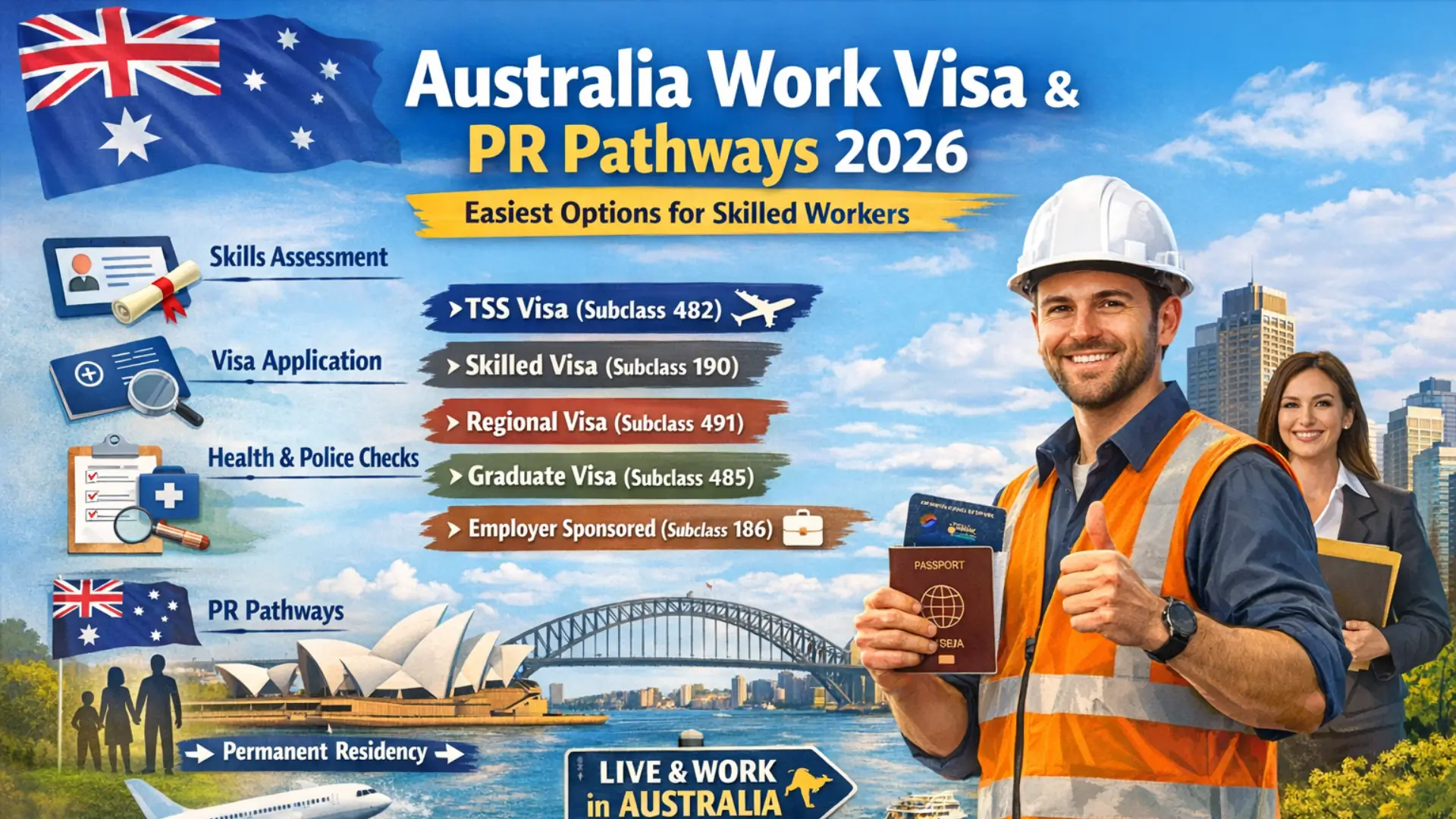
Australia has many visa types. The best visa depends on your job, age, experience, and future plans. Below are the most common and easier options for skilled workers in 2026.
Temporary Skill Shortage Visa
This visa allows an employer to sponsor you. You can work in Australia for a short or medium term.
This visa is good if:
- You already have a job offer.
- Your employer is approved.
- You want to gain Australian work experience.
Many people use this visa as a first step toward PR.
Skilled Nominated Visa
This is a permanent residency visa. You must be nominated by an Australian state or territory.
This visa is good if:

- Your occupation is in demand in a specific state.
- You can meet points requirements.
- You want PR directly.
Skilled Work Regional Visa
This is a regional provisional visa. It means you live and work in regional areas, not big cities.
This visa is good if:
- You are open to living in smaller cities.
- You have state nomination or family support.
- You want a clear PR pathway later.
After living and working for a few years, you can apply for PR.
Skilled Independent Visa
This is a points-based PR visa. No job offer is needed.
This visa is good if:
- You have strong points.
- Your occupation is on the skilled list.
- You want freedom to live anywhere.
It is competitive but very attractive.
Employer Nomination Scheme
This visa gives direct PR through employer sponsorship.
This visa is good if:
- You have long-term employment.
- Your employer wants to sponsor you.
- You meet skill and age rules.
Temporary Graduate Visa
This visa is for international students who studied in Australia.

This visa is good if:
- You completed an Australian qualification.
- You want local work experience.
- You plan to move to PR later.
PR Pathways for Skilled Workers
Many temporary visas lead to PR. Think of it like renting a house first. Later, you buy it.
Common PR pathways include:
- 482 to 186 transition.
- 485 to 189 or 190.
- 491 to permanent regional PR.
Choosing the right pathway early saves time and money.
Eligibility Criteria (Simple Explanation)
Each visa has its own rules. But most skilled visas need these basics:
Occupation
Your job must be on the skilled occupation list.
Qualifications
You must have education related to your job.
Skills Assessment
This is a check by an official body. It confirms your skills match Australian standards.
Age
Most PR visas require you to be under 45 years old.

English Language
You must prove English skills. Tests include IELTS or PTE.
Health and Character
You must pass medical checks and police clearance.
Job Offer
This is needed for employer-sponsored visas.
Meeting all rules is very important.
Required Documents
Prepare documents carefully. Missing papers cause delays or rejection.
You usually need:
- Valid passport.
- Completed visa application form.
- Passport-size photos.
- Skills assessment letter.
- Educational certificates.
- Work experience letters.
- English test results.
- Job offer or contract (if required).
- Police clearance certificates.
- Medical examination reports.
- Proof of funds (for some visas).
Always upload clear and correct documents.
Step-By-Step Visa Application Process
Step 1: Choose the Right Visa
Match your job and goals with the visa type.
Step 2: Skills Assessment
Apply to the official assessing authority.

Step 3: English Test
Book IELTS or PTE. Meet minimum scores.
Step 4: Job Offer or State Nomination
Get employer sponsorship or apply for state nomination if needed.
Step 5: Submit Visa Application
Apply online through the official portal. Pay fees.
Step 6: Medical and Police Checks
Complete health exams and police verification.
Step 7: Application Review
Immigration checks documents and details.
Step 8: Visa Decision
You receive approval or refusal notice.
Step 9: Travel and Start Work
Move to Australia and begin your job.
Processing Time and Visa Duration
- Temporary visas: Usually 3 to 6 months.
- PR visas: Usually 6 to 12 months.
Visa validity:
- Temporary visas last 2 to 4 years.
- PR allows permanent stay and work.
Common Reasons for Visa Rejection
Many applications fail due to simple mistakes.
Common reasons include:
- Wrong or missing documents.
- Weak skills assessment.
- Low English scores.
- Employer not approved.
- Health or character issues.
- Occupation not on the list.
Avoid these errors to improve success.
Useful Tips for Success
- Check occupation lists before applying.
- Prepare documents early.
- Use honest information only.
- Improve English scores if needed.
- Choose regional options for faster PR.
- Follow instructions carefully.
Small steps make a big difference.
FAQS About
Can I include my family?
Yes. You can include spouse and children.
Can a temporary visa lead to PR?
Yes. Many people move from temporary to PR.
Do I need a job offer for all visas?
No. Subclass 189 does not need one.
How long can I stay on a temporary visa?
Usually 2 to 4 years.
Can I change employers?
Some visas allow it with new sponsorship.
Conclusion
Australia offers strong opportunities for skilled workers in 2026. With the right planning, the process becomes clear and manageable. If you understand eligibility rules, prepare correct documents, and follow each step carefully, your chances of success improve greatly.