
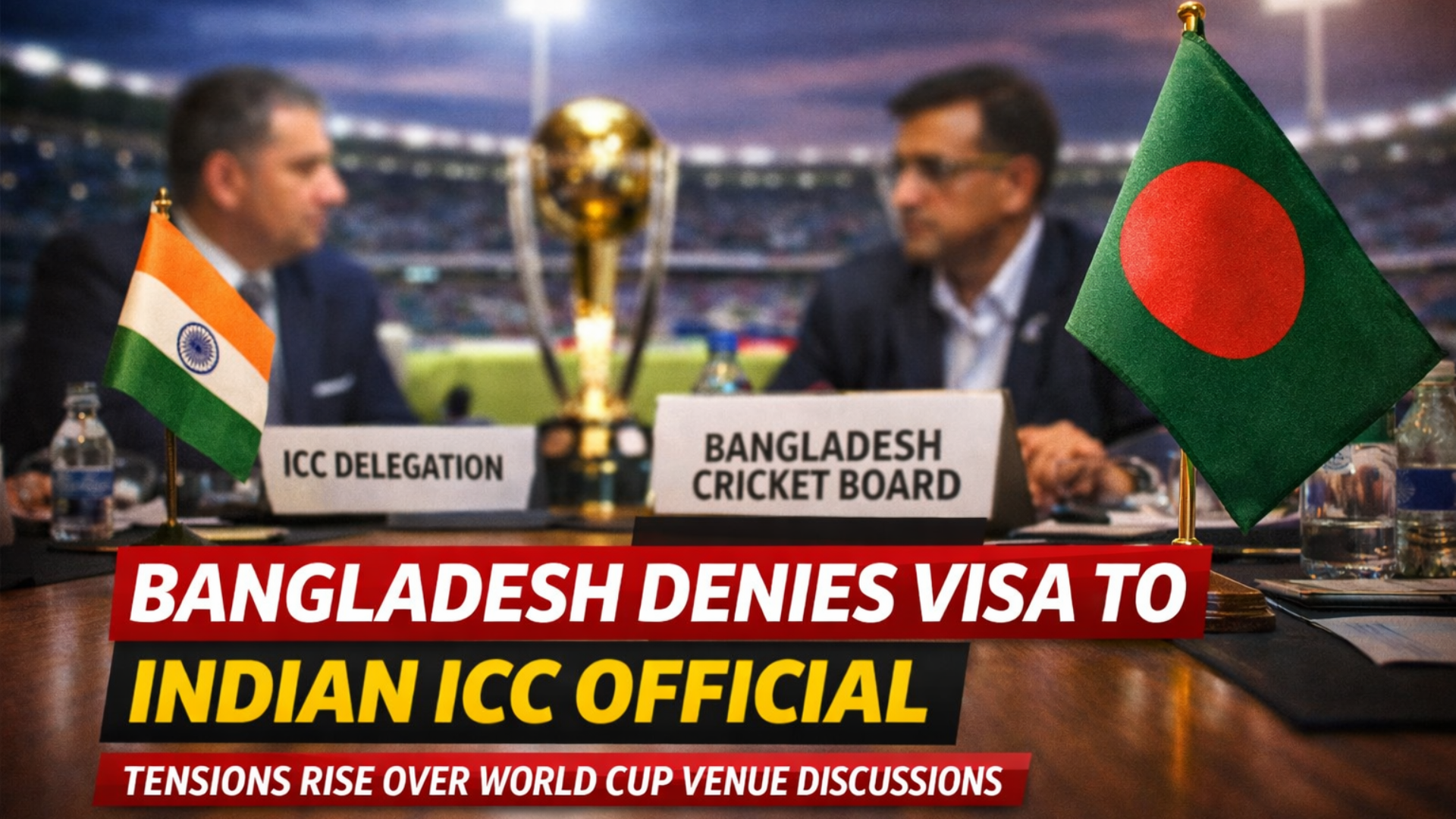
Bangladesh Denies Visa to Indian Executive in ICC. Bangladesh has reportedly denied a visa to an Indian executive who was part of an International Cricket Council delegation scheduled to visit the country for discussions on upcoming World Cup venues. The move, first reported by Indian media, has drawn attention to growing logistical and security sensitivities surrounding international cricket tournaments in South Asia.
The visa decision is said to have disrupted planned talks between the ICC and the Bangladesh Cricket Board, highlighting the complex challenges involved in finalising World Cup venues amid regional security concerns.
ICC Delegation Visit to Bangladesh: What Was Planned
According to reports, the ICC had planned to send a two-member delegation to Bangladesh for a two-day visit beginning on Tuesday. The purpose of the visit was to discuss possible changes to World Cup match venues, an issue that has gained urgency due to security and logistical considerations.
The proposed delegation reportedly included:

- The ICC’s Head of Anti-Corruption and Security
- A senior Indian executive associated with the ICC delegation
However, while Bangladesh authorities approved a visa for the Head of Anti-Corruption and Security, they declined to issue a visa to the Indian executive, affecting the delegation’s planned visit.
Visa Refusal and Its Immediate Impact
The refusal to grant travel clearance to one member of the delegation meant that the ICC’s intended two-member visit could not proceed as originally planned. As a result, discussions on World Cup venue adjustments were delayed or partially disrupted.
Indian media reports suggest that the visa decision was administrative in nature, though no official explanation has been provided publicly by Bangladeshi authorities.

World Cup Venue Talks and Security Concerns
The main objective of the ICC delegation’s visit was to hold consultations with the Bangladesh Cricket Board regarding proposed changes to World Cup venues. These discussions are part of the ICC’s broader efforts to ensure:
- Player and official safety
- Smooth tournament logistics
- Compliance with international security standards
The venue issue has become increasingly sensitive amid reports that Bangladesh has declined to play its T20 World Cup matches in India, citing security concerns. This stance has reportedly prompted ongoing discussions between the ICC and the BCB about alternative arrangements.
No Official Comment From ICC or BCB
As of now, neither the ICC nor the Bangladesh Cricket Board has issued an official statement confirming or denying the reported visa refusal. The absence of formal clarification has left room for speculation, particularly regarding whether the decision was linked to broader diplomatic or security considerations.

Cricket administrators often avoid public commentary on visa and security matters, as such issues typically involve government authorities and sensitive bilateral relations.
Diplomatic and Logistical Challenges in Tournament Planning
This development underscores the diplomatic and logistical challenges faced by international sporting bodies when organising global tournaments. Cross-border travel, visas, and security clearances are critical components of tournament planning, especially in regions with complex political dynamics.
For the ICC, balancing:

- Member board concerns
- Host nation security assessments
- Fair competition logistics
remains a delicate task as preparations for the World Cup continue.
What Happens Next?
Despite the setback, the ICC is expected to continue coordinating with its member boards to:
- Finalise World Cup venues
- Confirm match schedules
- Address security and travel-related concerns
Alternative meetings, virtual consultations, or revised travel plans may be considered to keep preparations on track.

Conclusion
The reported denial of a visa to an Indian executive in an ICC delegation highlights how security, diplomacy, and logistics intersect in international cricket. While Bangladesh approved travel for one ICC official, the refusal granted to another has temporarily affected venue-related discussions ahead of the World Cup.