
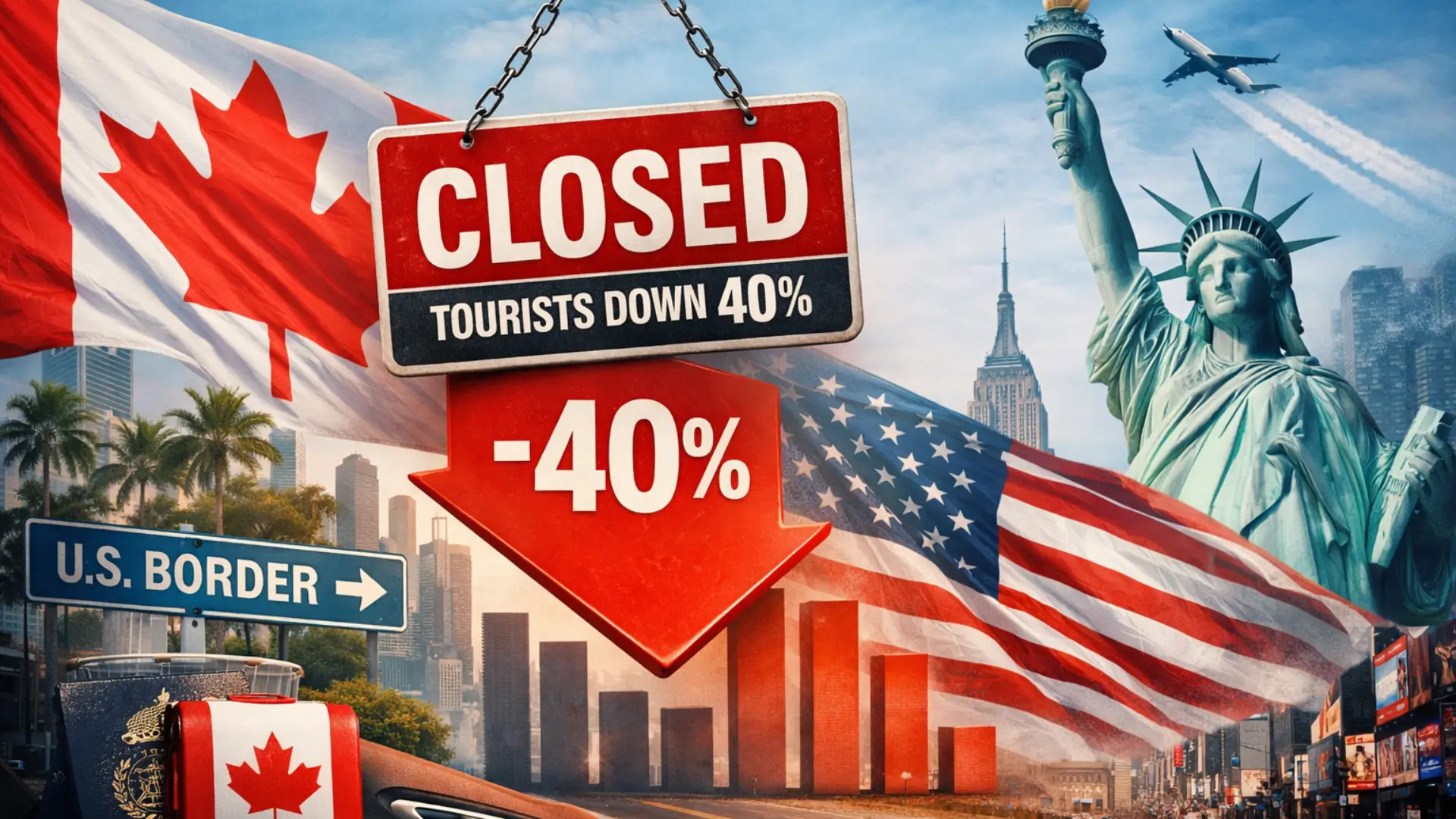
Canadian Tourists to USA Drop by 40%. cross-border travel between Canada and the United States faced an unexpected shock. Canadian tourists traveling to the USA dropped by nearly 40%, creating serious concern across tourism, immigration, and economic sectors. This decline is not a one-month issue. It reflects a growing pattern driven by political tension, economic pressure, and changing traveler sentiment.
According to 2026 travel data, road travel from Canada to the U.S. declined by 38%, while air travel fell by 24% compared to the same period last year. This marks the fifth consecutive month of declining Canadian travel to the United States, signaling a deeper structural shift rather than a seasonal fluctuation.
Experts believe this trend could reshape not only U.S. tourism revenue but also its global immigration image.
Shocking Drop in Cross-Border Travel
Canadian tourists have historically been the largest source of international visitors to the United States. Any disruption in this flow creates immediate economic consequences. The near-40% decline in May 2025 has therefore raised alarms across policy, travel, and immigration circles.
Wayena Zafar, CEO of Wayena Zafar Immigration Law Firm, explains that fear and uncertainty are now driving travel decisions.
According to her, clients increasingly express hesitation about U.S. travel due to unclear immigration policies and perceived safety concerns. These anxieties are influencing even short-term tourist decisions.
Reasons Behind the Decline in Canadian Tourist Visas
The sharp decline in Canadian visitors is rooted in multiple interconnected factors.
Political Tensions
Recent trade disputes, tariff threats, and controversial political remarks have strained U.S.–Canada relations. These tensions triggered a travel boycott sentiment among Canadian travelers, many of whom now prefer to avoid the U.S. altogether.

Economic Uncertainty
A weaker Canadian dollar and rising inflation have made U.S. travel more expensive. Higher accommodation costs, food prices, and fuel expenses discourage leisure travel, especially for families.
Negative Travel Sentiment
More than 75% of surveyed Canadians reported reconsidering U.S. travel due to negative media coverage and policy uncertainty. This shift in public mood has had a direct impact on visa and travel applications.
Rise in Domestic Tourism
Instead of crossing borders, Canadians are choosing to travel within their own country. This shift is benefiting local Canadian tourism while hurting U.S. destinations.
Mr. Junaid, an immigration strategist at Wayena Zafar’s firm, notes that when sentiment changes in a close ally country, its effects spread across tourism, business travel, and even student mobility.
Deep Economic Fallout for the U.S. Tourism Sector
The economic impact of declining Canadian travel is severe. According to estimates from U.S. Travel Association, even a 10% decline in Canadian visitors can result in $2.1 billion in lost revenue and over 140,000 hospitality jobs at risk.
With the current decline nearing 40%, experts warn the actual losses could range between $6.3 billion or higher. Major tourism hubs such as New York, Florida, and California are particularly vulnerable.
Ms. Binish, an economics analyst at Wayena Zafar Immigration Law Firm, explains that tourism loss creates a domino effect. When tourist spending drops, small businesses, hotels, restaurants, and transport services suffer first.

Political Factors Behind the Canadian Travel Boycott
Political rhetoric has played a major role in shaping public opinion. Controversial remarks suggesting aggressive economic or territorial stances caused outrage among Canadian citizens.
As a result:
- 75% of Canadians changed their U.S. travel plans
- 56% canceled trips entirely
These figures reflect a serious trust gap. Travelers now prioritize destinations that feel welcoming, predictable, and politically stable.
Surge in Domestic Travel Within Canada
While the U.S. tourism industry struggles, Canada’s domestic travel sector is thriving.
Recent surveys reveal:
- 55% of Canadians plan local vacations in 2025
- Only 10% intend to visit the U.S.
- 77% prefer spending holidays within Canada
Immigration advisor Afshan explains that domestic travel feels safer and more economical. This shift strengthens Canada’s internal economy while weakening cross-border tourism dependency.
Global Impact on U.S. Tourism Beyond Canada
Canada is not the only market pulling back. The U.S. is experiencing a wider decline in international tourism.

Forecasts suggest:
- A 9% drop in global arrivals
- $8.5 billion in lost tourist spending
- Recovery levels still below pre-2019 benchmarks
With Europe and Asia offering clearer visa pathways and better travel messaging, the U.S. risks losing long-term tourist loyalty.
Proposed Budget Cuts to Brand USA
The situation could worsen further due to proposed funding cuts to Brand USA. The budget may drop from $100 million to just $20 million, significantly reducing international tourism promotion.
Marketing experts warn that without visibility and reassurance, regaining traveler confidence will be extremely difficult.
Tourism as an Export and Revenue Loss
Tourism is one of America’s largest export sectors. Every 1% drop in visitor spending results in approximately $1.8 billion in losses.
If current trends continue, tourism export revenue could fall by more than $21 billion in 2025. This loss affects airlines, hotels, retail, and even tax revenue at state levels.
Impact on the U.S. Immigration Image
Beyond tourism, this decline is damaging the U.S. immigration reputation. Negative travel sentiment discourages students, skilled professionals, and entrepreneurs.

Wayena Zafar explains that her firm has seen a noticeable shift. Many skilled applicants are now choosing Canada and the UK over the United States due to clearer policies and more consistent visa decisions.
Implications for Pakistani Travelers and the Diaspora
The downturn also impacts Pakistani families and professionals living across the U.S. and Canada.
Key challenges include:
- Delayed family reunions
- Reduced business travel
- Cancelled conferences and events
Many Pakistani families now prefer meeting in neutral countries like Turkey or Japan to avoid visa uncertainty.
Changing Migration Preferences Among Pakistanis
Recent data shows a 30–35% increase in Pakistani study and work applications to Canada and the UK over the last two years.
Reasons include:
- More predictable visa systems
- Flexible work permit options
- Greater trust in education pathways
Uncertainty in U.S. visa approvals continues to deter students and workers.

Economic Impact on Pakistani-American Businesses
Pakistani-owned businesses in the U.S. are facing declining footfall and revenue, especially in travel, food, and retail sectors.
Ethnic business hubs in New York and Houston report reduced tourist activity, forcing layoffs and tighter budgets. Small businesses are bearing the heaviest burden of this tourism slowdown.
Canada Progressive Work Permit Policies
In contrast, Canada continues to attract global talent through modern immigration reforms. New policies allow foreign workers to change employers under interim authorization without waiting for full approval.
This flexibility increases trust and reflects evolving labor market needs.
Services by Wayena Zafar Immigration Law Firm
Wayena Zafar Immigration Law Firm provides strategic global migration solutions, including:
- Canada PR, study visas, and work permits
- UK Skilled Worker and Youth Mobility visas
- USA H1B and student pathways
- European residency and investment programs
The firm focuses on long-term planning rather than short-term visa processing.
Conclusion
The sharp 40% decline in Canadian tourists to the USA is a serious warning sign. Political tension, economic pressure, and policy uncertainty are reshaping global travel behavior. Unless addressed urgently, the U.S. risks long-term damage to tourism revenue and immigration trust, while countries like Canada and the UK continue to gain ground.