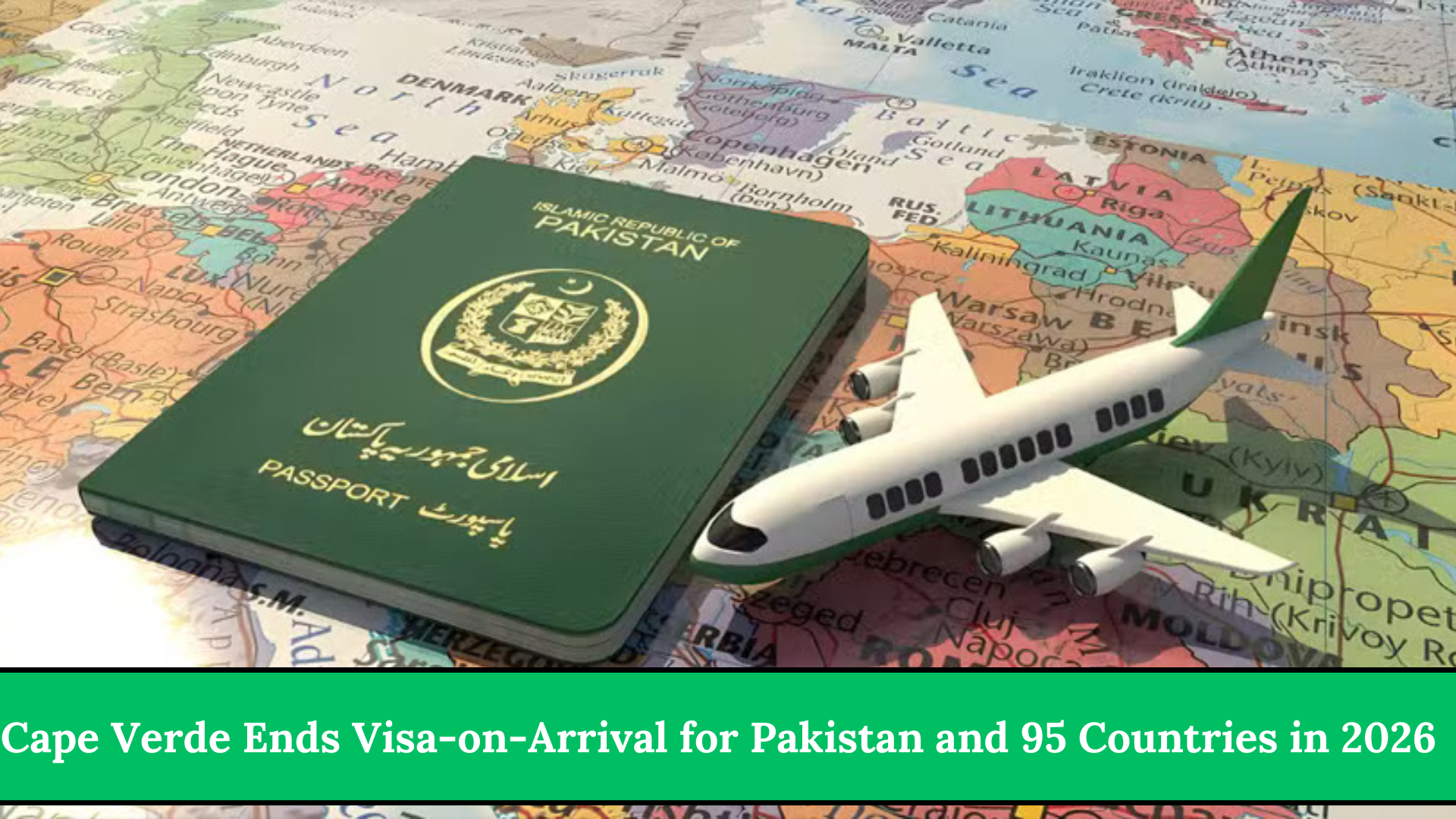
Cape Verde Ends Visa-on-Arrival. A small island nation with a population of about 5 lakh (500,000) has officially ended its visa-on-arrival facility for Pakistan and 95 other countries. The country, Cape Verde, has introduced new entry rules that now require affected travelers to obtain a visa before travelling.
This decision has come as a major change for passengers who previously relied on easy arrival procedures.
Cape Verde Visa Policy Change Effective January 2026
According to official reports, the new visa rules came into force on 1 January 2026.

Until the end of 2025, travelers from dozens of countries could use Cape Verde’s EASE (Efficient Automatic and Safe Entry) system. Under this process:
- Travelers registered online before departure
- Paid the required fee through the portal
- Received a visa on arrival at Cape Verde airports
This facility has now been withdrawn for 96 nationalities, including Pakistan.

Visa Required Before Travel for Pakistan and Others
Under the new rules:
- Citizens of affected countries must obtain a visa in advance
- Visas must be secured from a Cape Verdean embassy or consulate
- The requirement applies to:
- Entry visas
- Transit visas
- Airport stopover visas
Travelers who arrive without a valid visa may face:

- Refusal of entry
- Denial of onward transit
List of 96 Countries Affected by Visa-on-Arrival Suspension
The following countries are now subject to a prior visa requirement for Cape Verde:
Afghanistan, Algeria, Armenia, Azerbaijan, Bahrain, Bangladesh, Belarus, Bhutan, Bolivia, Botswana, Brunei, Burundi, Cambodia, Cameroon, Central African Republic, Chad, Chile, Colombia, Comoros, Congo, Costa Rica, Democratic Republic of the Congo, Djibouti, Dominica, Dominican Republic, Ecuador, Egypt, El Salvador, Eritrea, Eswatini, Ethiopia, Gabon, Guatemala, Guyana, Haiti, Honduras, India, Indonesia, Iran, Iraq, Jamaica, Jordan, Kazakhstan, Kiribati, Kyrgyzstan, Laos, Lebanon, Lesotho, Libya, Madagascar, Malawi, Mauritania, Mexico, Mongolia, Myanmar, Namibia, Nauru, Nepal, Nicaragua, North Korea, Oman, Pakistan, Palau, Palestine, Panama, Papua New Guinea, Paraguay, Peru, Philippines, Puerto Rico, Rwanda, Samoa, Somalia, South Sudan, Sri Lanka, Sudan, Suriname, Syria, Taiwan, Tajikistan, Tanzania, Tokelau, Tonga, Trinidad and Tobago, Tunisia, Turkey, Turkmenistan, Tuvalu, Uganda, Uzbekistan, Vanuatu, Venezuela, Vietnam, Yemen, Zambia, Zimbabwe.

Legal Basis Behind the Decision
The policy change is based on Decree No. 244/GMAI/2025, which was published in November 2025 in Cape Verde’s official gazette.
This decree formally updates the country’s immigration law and lists the nationalities now required to obtain a visa before travel.

Limited Exemptions Still Apply
Cape Verde has maintained specific exemptions for certain groups, including:
- Airline crew members
- Accredited diplomatic personnel
- Selected residence permit holders
- Some individuals born in Cape Verde who later acquired foreign nationality
All exemptions apply only if conditions set in the decree are met.
EASE Registration Still Mandatory for All Visitors
Despite the visa changes, Cape Verde has not cancelled the EASE system entirely.
- EASE online registration remains mandatory
- Airport Security Tax still applies to all visitors
- Even visa-exempt travelers must complete registration
For Pakistan and other affected countries, the EASE portal now clearly warns that a visa is required before departure, and arrival without one can result in entry refusal.
Conclusion
Cape Verde’s decision to end visa-on-arrival for Pakistan and 95 other countries marks a significant shift in its immigration policy. From January 2026, affected travelers must secure a Cape Verde visa in advance, even for transit or stopovers. While the EASE registration system remains active, it no longer replaces visa requirements for these nationalities. Travelers are strongly advised to check visa rules early to avoid delays or denied entry.