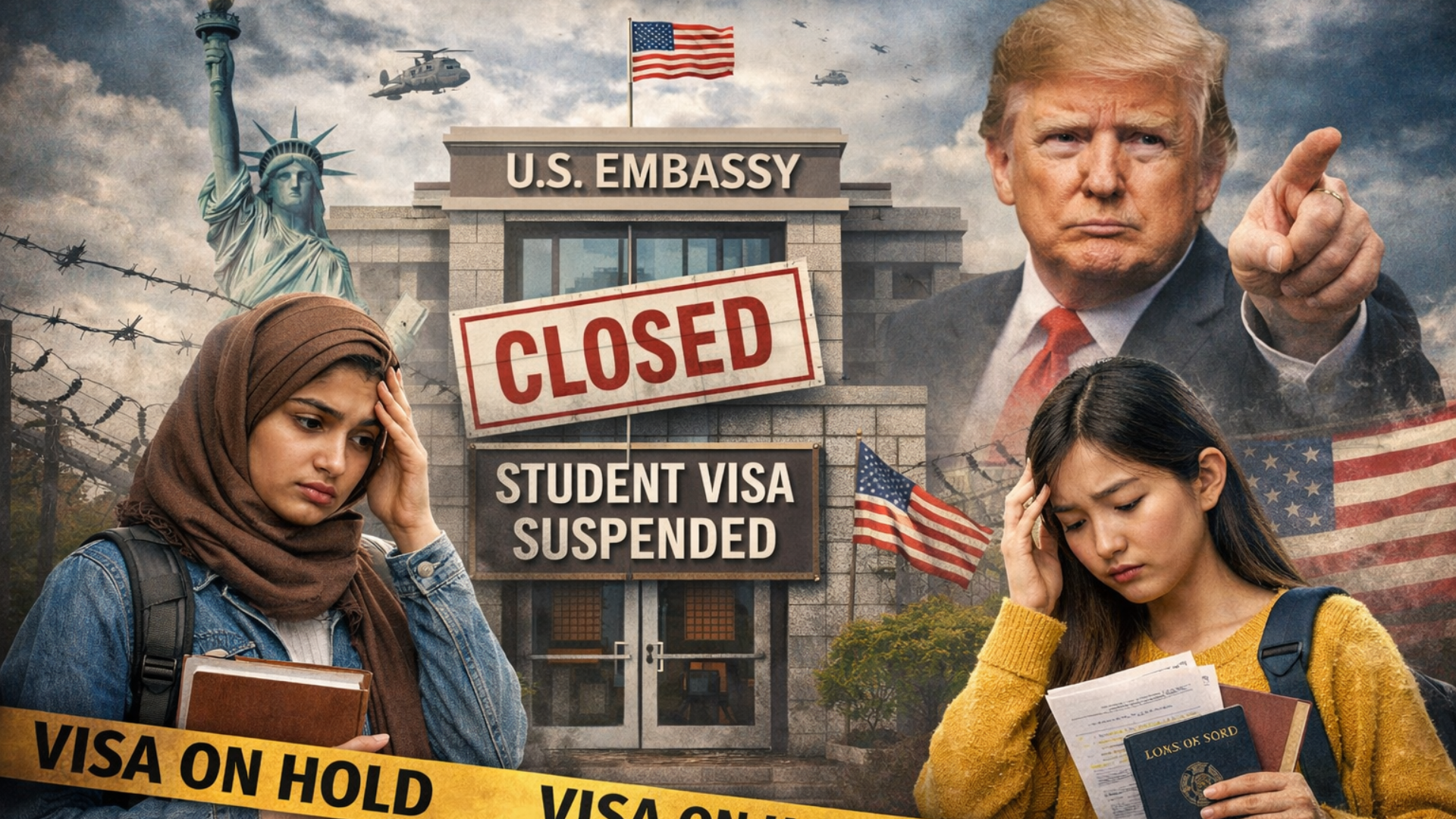
Interviews Temporarily Suspended. On May 27, 2026, the administration of Donald Trump announced a temporary suspension of new international student visa interviews. This decision affects F, M, and J visa categories and has created serious concern among students, universities, and immigration experts worldwide. Many students had already completed admission processes, paid fees, and prepared for travel when the announcement suddenly put their plans on hold.
Growing Concerns Among Immigration Experts
According to immigration expert, who has more than 15 years of experience guiding international students, this suspension reflects a deeper shift in U.S. immigration policy. The focus is moving away from educational openness toward strict national security priorities, making the student visa process more stressful and unpredictable for applicants and their families.
Official Reason Behind the Visa Interview Halt
The decision was announced by the U.S. State Department under Marco Rubio, citing national security concerns. The administration plans to revise its vetting system by introducing expanded social media screening. Authorities aim to review online content to identify material considered extremist, anti-Semitic, or anti-American before approving visa applications.

Why Certain Regions May Be More Affected
explains that students from Middle Eastern and South Asian countries could face greater scrutiny. In these regions, social media often includes political discussions that may be misinterpreted during screening. A 2024 report by the Migration Policy Institute found that enhanced vetting increases visa processing time by three to six months, placing students at risk of missing academic deadlines.
Emotional and Psychological Impact on Students
The sudden suspension has caused widespread anxiety and disappointment. Many students invested years preparing for U.S. education, including language exams, financial planning, and university applications. Immigration advisors report rising stress levels among students and families. Research published in the Journal of Immigrant & Refugee Studies in 2024 confirms that visa delays significantly increase emotional distress and disrupt both academic and personal stability.
Pattern Linked to Past Trump-Era Policies
This move follows a pattern seen during earlier Trump-era restrictions. Executive Order 13780 introduced social media vetting that slowed visa approvals. In 2025, thousands of student visas linked to universities such as Columbia University and New York University were briefly revoked before being restored after legal challenges. The Chronicle of Higher Education reports that international student enrollment has dropped by 8 percent since 2017.
Universities Under Political Pressure
The suspension also reflects growing political pressure on U.S. universities. The recent freeze of $1.8 billion in federal funding to Columbia University over allegations of antisemitism highlights how education and immigration are becoming tied to ideological conflicts. Experts warn that such measures weaken academic diversity and damage the global reputation of U.S. institutions.
International Students Feeling Excluded
Many international students now feel unwelcome. A 2024 survey by NAFSA found that 65 percent of international students feel less valued due to restrictive policies. Despite these feelings, a large number remain determined to pursue education in the United States.
Possible Outcomes of the Visa Suspension
Experts at Immigration Law Firm believe several outcomes are possible. These include stricter and less transparent social media vetting, an extended suspension beyond summer 2025, or legal challenges from education advocacy groups. The Institute of International Education estimates that international students contribute nearly $40 billion annually to the U.S. economy, making prolonged restrictions financially risky.
Hope and Adaptation Despite Uncertainty
Despite current challenges, many students are adapting. Studies published in the International Journal of Intercultural Relations show that students facing visa barriers often explore alternative countries or online education pathways. Some are now considering institutions in Canada and Australia or enrolling in online programs offered by universities such as Arizona State University.
Broader Economic and Academic Impact
The visa suspension affects more than students alone. According to the U.S. Department of Commerce, international students support over 350,000 jobs in the United States. The National Science Foundation reports that international students contribute nearly 40 percent of U.S. research output, particularly in science, technology, and medicine.

Support and Guidance from Immigration Experts
Immigration Law Firm continues to assist students by providing guidance on study visas, work permits, citizenship programs, and alternative global pathways. Experts stress that while the situation is difficult, informed planning and professional advice can help students move forward confidently.
Conclusion
The suspension of U.S. student visa interviews has created uncertainty, emotional stress, and academic delays for thousands of international students. However, with resilience, alternative study options, and expert guidance, students can still navigate this challenging period. Staying informed and flexible remains the strongest strategy for achieving long-term educational goals.