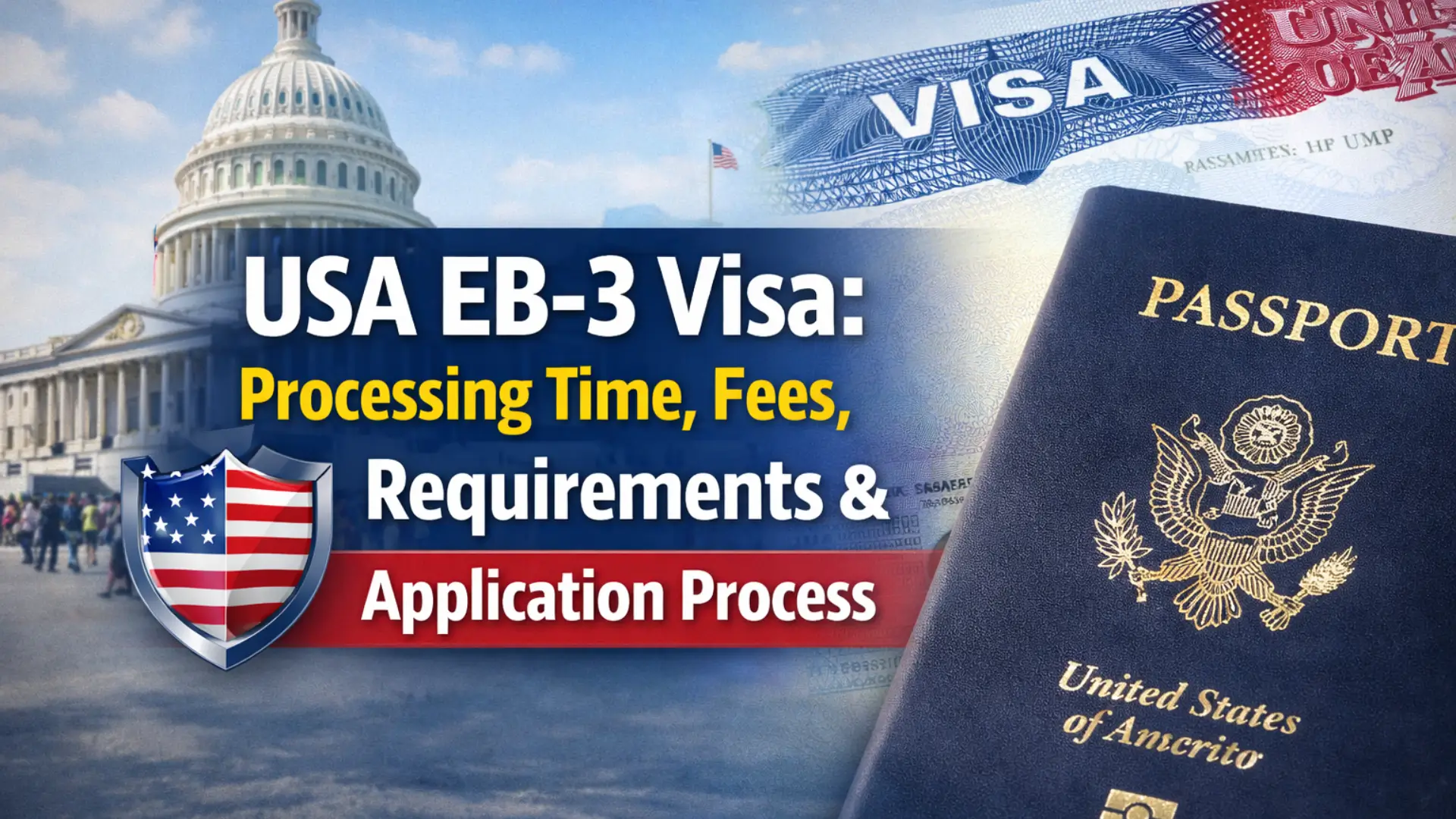
USA EB-3 Visa. The USA EB-3 Visa is an employment-based immigrant visa that allows foreign nationals to live and work permanently in the United States. It falls under the third preference employment category and is designed for professionals, skilled workers, and unskilled workers who meet specific eligibility requirements and have a valid job offer from a U.S. employer.
This visa is a popular pathway for individuals seeking permanent residency in the U.S. through employment sponsorship.
Types of EB-3 Visa Categories
The EB-3 visa is divided into three main categories based on qualifications and job type:
1. EB-3 (A) Skilled Workers
This category is for individuals who:
- Have at least two years of work experience or training
- Receive a full-time job offer from a U.S. employer
- Meet labor certification requirements
2. EB-3 (B) Professionals
To qualify as a professional, applicants must:

- Hold a bachelor’s degree or equivalent
- Have a job offer that requires a degree
- Be sponsored by a U.S. employer
3. EB-3 (C) Other Workers (Unskilled)
This category includes applicants who:
- Perform jobs requiring less than two years of training
- Have a permanent job offer
- Meet labor certification conditions
EB-3 Visa Processing Time
The processing time for the EB-3 visa varies depending on the applicant’s location, visa category, and demand from their country. The process involves multiple stages.
Form I-140 Processing
The Immigrant Petition for Alien Worker (Form I-140) takes about 7–8 months on average.
Premium processing is available, reducing the timeline to 15 days for an additional fee.
Visa Number Waiting Time
After I-140 approval, applicants must wait for a visa number to become available. This waiting period depends on:

- Country of origin
- Annual visa quota
- Demand for EB-3 visas
Adjustment of Status (Form I-485)
For applicants already in the U.S., the adjustment of status process can take 6 to 32 months, depending on USCIS workload and case complexity.
Consular Processing
Applicants outside the U.S. go through consular processing, where their case is sent to the National Visa Center (NVC) and then to the nearest U.S. embassy or consulate. Interview scheduling depends on embassy availability and local processing times.
Step-by-Step EB-3 Visa Application Process
Applying for an EB-3 visa involves multiple steps that must be completed in order.
1. Labor Certification (PERM)
The U.S. employer must obtain a Permanent Labor Certification from the Department of Labor. This confirms:

- No qualified U.S. workers are available
- Hiring a foreign worker will not harm local wages
2. Filing Form I-140
Once labor certification is approved, the employer files Form I-140 with USCIS. This petition proves the applicant meets EB-3 eligibility criteria.
3. Visa Application or Adjustment of Status
After I-140 approval:
- Applicants outside the U.S. apply via immigrant visa processing (DS-260)
- Applicants inside the U.S. file Form I-485 for a green card
EB-3 Visa Fees (2025 Updated)
Understanding EB-3 visa fees is important for both employers and applicants. Below are the common costs as of 2025.
Fees for Applicants Inside the U.S.
| Form | Description | Fee | Paid By |
|---|---|---|---|
| I-140 | Immigrant Petition | $715 | Employer |
| Immigrant Fee | Post-approval fee | $235 | Applicant |
Fees for Applicants Outside the U.S.
| Form | Description | Fee | Paid By |
|---|---|---|---|
| I-140 | Petition Fee | $715 | Employer |
| DS-260 | Immigrant Visa Application | $345 | Applicant |
| I-864 | Affidavit of Support | $120 | Applicant |
Additional Costs to Consider
- Premium Processing: $2,805 for faster I-140 approval
- Asylum Program Fee: $600 (for employers with 25+ workers)
- Optional forms like I-765 (work permit) and I-131 (travel document) may apply
Note: Fees may change, so always verify with official USCIS updates.

Eligibility Requirements for EB-3 Visa
Each EB-3 category has different eligibility criteria, but some general requirements apply to all applicants:
- A valid job offer from a U.S. employer
- Approved labor certification
- Employer sponsorship
- Proof of qualifications (education or experience)
The employer must also demonstrate that hiring a foreign worker will not negatively impact U.S. workers.
Important Things to Know Before Applying
1. Visa Bulletin
The U.S. Department of State releases a monthly Visa Bulletin showing visa availability. This helps applicants track waiting times based on visa category and country.
2. Priority Date
Your priority date is assigned when Form I-140 is filed. It determines your place in the visa queue and directly affects how long you wait for a green card.

3. Job Portability Rule
If your I-140 is approved and your I-485 has been pending for 180 days, you may be able to change jobs without restarting the process. However, the new job must be in a similar field.
Benefits of the EB-3 Visa
The EB-3 visa offers several advantages, including:
- Permanent residency (Green Card)
- Ability to bring family members
- Pathway to U.S. citizenship
- Freedom to live and work anywhere in the U.S.
It is considered one of the most accessible employment-based immigration options for foreign workers.
Final Thoughts
The USA EB-3 Visa provides a valuable opportunity for foreign workers seeking permanent residency through employment. While the process involves multiple steps such as labor certification, petition filing, and visa processing, proper planning can make the journey smoother.